
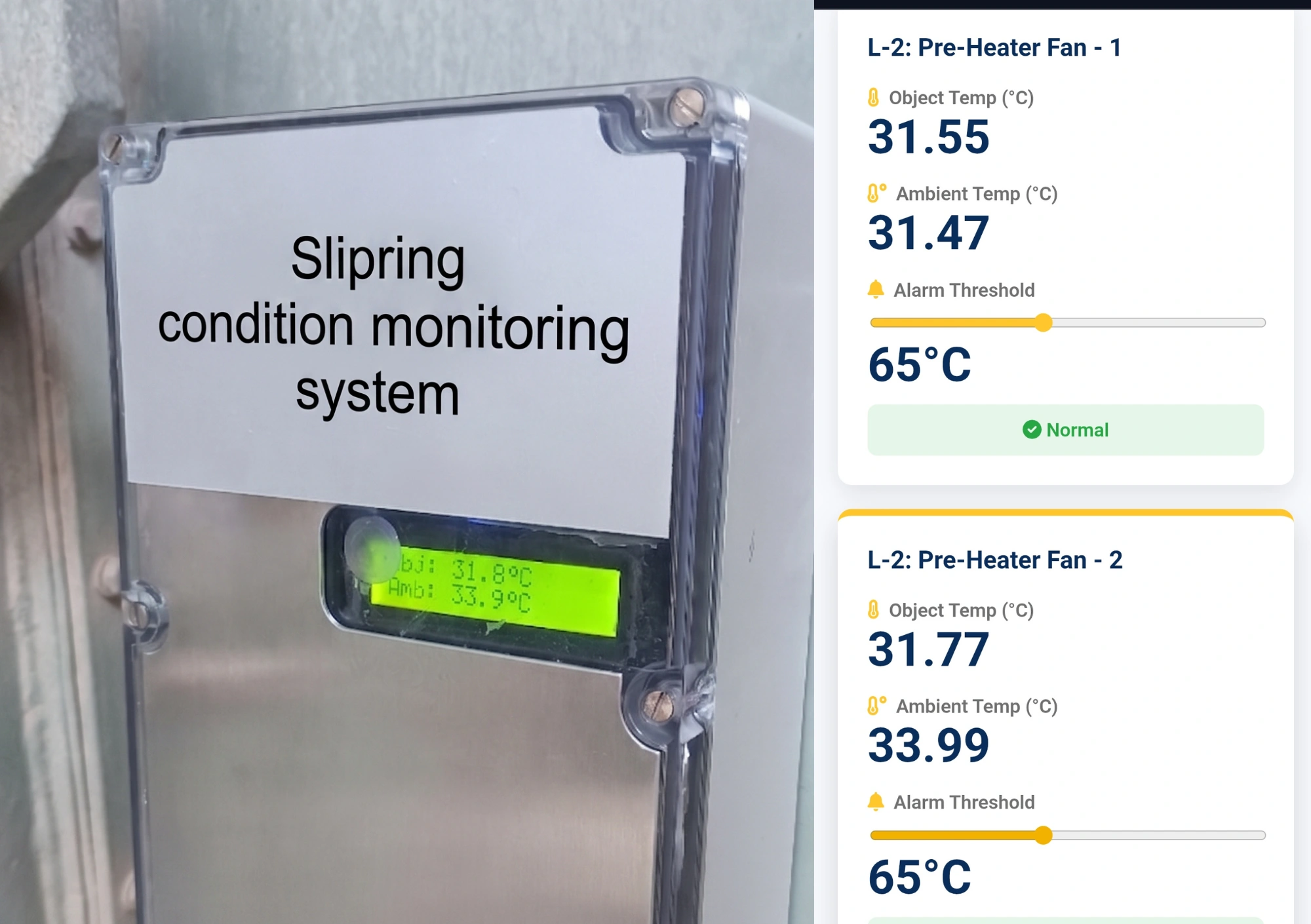
Stop unplanned downtime with our advanced Slipring Condition Monitoring System. Designed for Indian industries to improve MTBF and ensure zero-blackout operations. Maximize motor reliability with our Gold Kaizen Award-winning Slipring Condition Monitoring System. Achieve zero blackouts, improve MTBF, and automate carbon brush tracking. Contact our SPOC for a custom quote today.
Table of Contents
The Ultimate Guide to Slipring Condition Monitoring Systems: Achieving Zero Blackouts and Peak Reliability
In the high-stakes environment of heavy industries—from cement plants to power utilities—the Wound Rotor Induction Motor (WRIM) is the undisputed workhorse. However, these machines have a “mission-critical” Achilles’ heel: the slipring and carbon brush assembly.
Historically, monitoring these components meant “Boot on the Ground” inspections—manual, dangerous, and often too late. At Voltamphub.com, we’ve engineered a digital revolution. Our Slipring Condition Monitoring System (SCMS) isn’t just a tool; it’s a nationally recognized, award-winning solution designed to move your plant from reactive firefighting to predictive mastery.
Why Slipring Health Dictates Your Plant’s ROI
A single slipring flashover doesn’t just stop a motor; it stops your revenue. When a massive kiln or mill goes dark due to a preventable electrical fault, the costs are staggering:
- Production Loss: Millions of rupees per hour.
- Repair Costs: Expensive rotor rewinding and spare procurement.
- Safety Risks: High-voltage flashovers and arc-flash hazards.
By implementing a continuous monitoring strategy, plants can finally sustain a “Zero Blackout” status, ensuring that electrical assets perform optimally throughout the fiscal year.
The Science of Slipring Failure – What You Can’t See
To monitor a system effectively, you must understand how it fails. Slipring assemblies operate under extreme electrical and mechanical stress we built Slipring Condition Monitoring System.
1.1 The Thermal Runaway Effect
Current distribution among parallel carbon brushes is rarely equal. If one brush loses tension or seats poorly, the remaining brushes carry the excess load. This leads to localized heating, further increasing resistance and creating a “Thermal Runaway” loop. Without sensors, you won’t know this is happening until the smell of burning resin hits the floor.
1.2 Mechanical Wear and Vibration
Carbon brushes are sacrificial. However, uneven wear creates “pitting” on the slipring surface. Once the surface is compromised, it acts like sandpaper, destroying a fresh set of brushes in hours rather than months.
Comparing Maintenance Strategies
| Feature | Manual Inspection (TBM) | Voltamphub SCMS (PdM) |
| Data Frequency | Weekly/Monthly | Real-time (Every Second) |
| Safety | High Risk (Proximity to Live Parts) | Zero Risk (Remote Monitoring) |
| Accuracy | Subjective/Human Error | Sensor-Based Precision |
| MTBF Impact | Minimal | Significant Improvement |
| Cost Savings | Reactive & Expensive | Predictive & Optimized |
Our Gold Kaizen Award-Winning Solution
We are proud to share that our Slipring Condition Monitoring System was recently awarded the Gold Kaizen Award at the National Kaizen Championship.
This recognition wasn’t just for the technology—it was for the impact. By solving the complex problem of remote brush-wear tracking and flashover prevention, we demonstrated a measurable increase in industrial productivity and safety. When you choose our system, you are choosing a solution validated by the highest industry standards in India. This Industrial IoT system Gold Kaizen award slipring condition monitoring system is the game changer.
Key Features of the Voltamphub SCMS:
- IoT-Enabled Wear Tracking: Real-time linear sensors track brush length down to the millimeter.
- Thermal Imaging Integration: Non-contact IR sensors monitor the “Delta T” between phases.
- Cloud SCADA Dashboard: View the health of every motor in your fleet from a single mobile or desktop interface.
- Automated Alerts: Receive WhatsApp or Email notifications the moment a parameter crosses a “Warning” threshold.
Improving MTBF and Store Savings
For any Department Head (DH) or Maintenance Engineer, the two most important metrics are MTBF (Mean Time Between Failures) and Store & Spares Optimization.
Calculating the Value of Prediction
The formula for Mean Time Between Failures is:
By using our Slipring condition Monitoring system, you effectively reduce the “Number of Failures” to near zero. Furthermore, by knowing exactly when a brush will expire, you no longer need to overstock inventory. Our clients have realized cumulative savings of over Rs 34.84 Crore in spares management by switching to our predictive model.
More effective and fast calculation on Load and other – try our Motor FLA Calculator: Precision 1-Phase & 3-Phase The No.1 Amperage Tool
Safety and Productivity (S&P) – The “Zero Proximity” Goal
As a leader in industrial safety, we believe that the best way to prevent an accident is to remove the human from the hazard.
- HIRA Compliance: Our system reduces the Risk Priority Number (RPN) in your HIRA (Hazard Identification and Risk Assessment) by eliminating the need for live inspections.
- Boot on the Ground 2.0: We don’t eliminate the engineer; we give the engineer “superpowers.” Instead of walking to 50 motors, the engineer only goes to the one motor the system identifies as needing attention.
Installation and Technical Support
We don’t just ship hardware; we partner with your “Team Electrical.” Our onboarding process is inspired by the MITRAZ program—a 4-week journey ensuring your team is fully trained.
Technical Specifications:
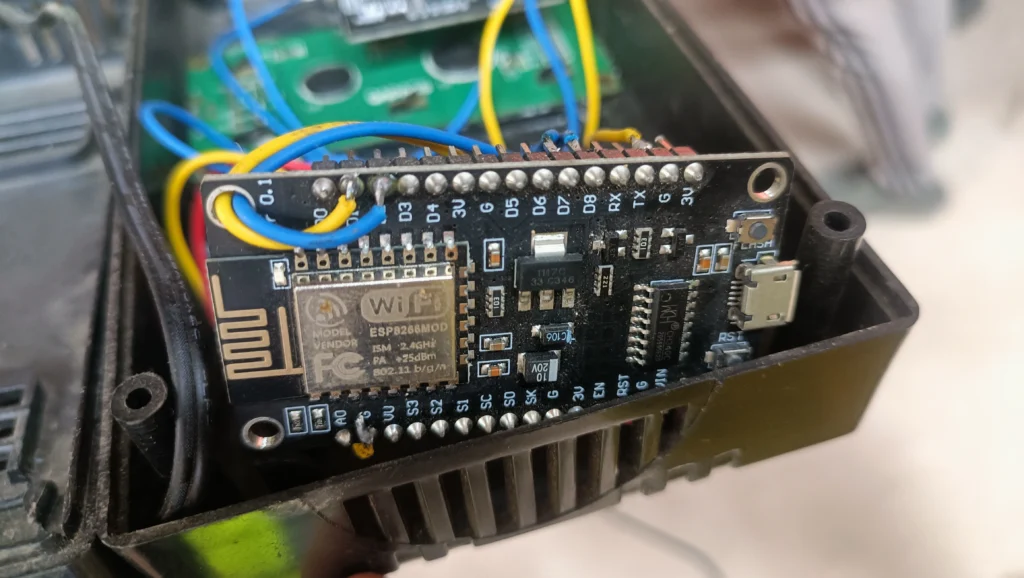
- Controller: Industrial PLC Grade Edge Nodes.
- Communication: WiFi, LoRaWAN, or RS485 Modbus.
- Cloud Support: Firebase / AWS / Azure Integration.
- Enclosure: IP65 Rated for cement and dusty environments.
Advanced Diagnostic Parameters – What Our SCMS Monitors
To achieve peak predictive maintenance, a Slipring Condition Monitoring System must go beyond simple temperature checks. Our system captures a holistic, real-time snapshot of the slipring’s operating environment. Here are the critical parameters our edge nodes continuously track:
1. High-Resolution Thermal Profiling
Excessive heat is the primary precursor to slipring failure. Using non-contact infrared sensors, our system tracks the temperature of individual phases, the carbon brush gear, and the ambient cooling air. By calculating the “Delta T” (temperature difference), the SCMS identifies localized hotspots caused by unequal current sharing long before they escalate into thermal runaway.
2. Vibration and Shock Acoustics
Mechanical instability, such as out-of-round sliprings or failing bearings, translates directly into accelerated brush wear. By integrating multi-axis accelerometers, the SCMS detects high-frequency vibrations and acoustic anomalies at the brush-ring interface. This data helps distinguish between electrical faults (like sparking) and purely mechanical misalignments.
3. Precision Brush Wear Tracking
Instead of relying on estimated lifespans, the Voltamphub SCMS uses precise linear sensors to calculate the exact millimeter wear of the carbon brushes. This data feeds directly into a predictive algorithm that calculates the remaining operating time in days, allowing for perfectly timed, Just-In-Time (JIT) spares procurement.
Case Study – Sustaining “Zero Blackout” in Continuous Process Plants
When evaluating predictive maintenance, real-world impact is the only metric that matters. Heavy industries with continuous processes cannot afford unplanned downtime.
The Reliability Challenge
In highly demanding environments—such as driving massive kilns and raw mills—the reliability of Wound Rotor Induction Motors (WRIM) dictates overall plant output. Historically, the reliance on reactive, Time-Based Maintenance (TBM) resulted in frequent, unpredicted slipring flashovers. These catastrophic events caused massive production losses and inflated the inventory of emergency spares.
The Digital Solution
By moving away from standard visual inspections and implementing a rigorous Slipring Condition Monitoring System, maintenance teams can fundamentally shift their approach. The integration of 24/7 IoT sensors, combined with aggressive proactive planning and system strengthening, eliminates operational blind spots.
The Results: Millions Saved
The financial and operational impacts of this digital transformation are profound:
- Zero Blackout: Through proactive condition monitoring, entire facilities have successfully achieved and sustained a “zero blackout” status throughout a full fiscal year (FY-26).
- Massive Spares Optimization: By utilizing predictive wear data, procurement teams transition to intelligent ordering. This approach has driven massive cumulative store and spares savings, realizing up to Rs 34.84 Crore over a two-year period.
- Elevated MTBF: Preventing minor faults from cascading into major failures dramatically extends the Mean Time Between Failures (MTBF) for critical rotating assets.
Seamless SCADA Integration and Data Protocols
A monitoring system is only as good as its ability to communicate. The Voltamphub SCMS does not trap your data in proprietary software; it is designed for seamless integration into your existing industrial network.
- Standardized Protocols: Our edge controllers transmit real-time diagnostic data using industry-standard protocols such as Modbus TCP/IP and OPC-UA.
- Centralized Control Rooms: Data flows directly into your plant’s existing DCS or central SCADA, allowing your Team Electrical to monitor slipring health alongside process parameters.
- Cloud & Mobile Access: For remote diagnostics, the system utilizes secure IoT gateways (operating on Wi-Fi or robust cellular networks) to push data to a centralized Cloud dashboard. This empowers Department Heads (DH) to review alarm histories and remaining brush life from anywhere
1. Can this be retrofitted to old motors?
Yes! Our system is designed to be OEM-agnostic. Whether you have a 30-year-old motor or a brand-new machine, our sensors can be retrofitted during a short planned shutdown.
2. How does it handle the dusty environment of a cement plant?
The SCMS uses specialized dust-resistant enclosures and non-contact sensors that require zero maintenance, even in high-particulate areas.
3. What is the ROI period?
Most industrial plants see a full Return on Investment (ROI) after preventing just one unplanned stoppage. Typically, this happens within the first 6 months of installation.
Ready to Elevate Your Plant Reliability?
Don’t wait for the next flashover to realize the value of condition monitoring. Join the league of elite industries moving toward an automated, safe, and highly productive future.
Get a Custom Quote & Technical Demo
We are ready to provide a full site survey and a customized dashboard preview for your facility.
📧 Contact our SPOC (Single Point of Contact) directly:
Email: [email protected]
Voltamphub.com
Engineering the Future of Electrical Reliability.
Proud Winners of the Gold Kaizen Award – National Kaizen Championship.
Great content! Keep up the good work!